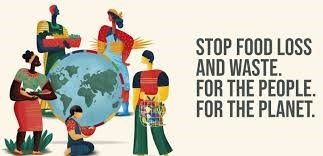
Today, September 29th, is a significant day on the UN calendar – it is the International Day of Awareness of Food Loss and Waste, or IDAFLW.
It is a special day designed to raise awareness of the scope and scale of the global food waste challenge, the linkage between food loss and waste and multiple Sustainable Development Goals, and the urgent need to work collaboratively at all levels of the food system to accelerate solutions to reduce global food loss and waste to achieve climate goals and advance the 2030 Agenda for Sustainable Development. This year’s messaging is powerful in its simplicity: Stop Food Loss and Waste – For the People, For the Planet.
A Resolution for Impact
Adopted by the UN General Assembly in December of 2019, the Resolution creating the IDAFLW noted that the 2030 Agenda for Sustainable Development calls for halving per capita global food waste at the retail and consumer levels and reducing food losses along production and supply chains, including post-harvest losses, by 2030 (see Target 12.3).
In addition, the Resolution pointed to the disconnect between food loss and waste and hunger, noting that one-third of world food production was lost or wasted annually while over 800 million suffered from chronic undernourishment. It also cited the first estimates of the food loss index from FAO’s State of Food and Agriculture in the World 2019 report, which indicated that approximately 14% of food produced globally was lost.
Further, the Resolution noted “the urgent need” to address food loss and waste worldwide and the associated risks to “climate change, agriculture sustainability, human livelihoods and food supplies.” It recognized the fundamental role of sustainable food production in promoting food security and nutrition for the global population while contributing to poverty alleviation and human health. And it recognized the importance of addressing food loss and waste issues at all stages of the food supply chain – from producer to end user – and of working collaboratively to achieve sustainable consumption and production.
In short, the Resolution highlighted the criticality of accelerating global efforts to reduce food loss and waste, and recognized that observance of the IDAFLW would contribute to raising awareness of the food loss and waste challenge and related solutions while promoting collective action toward meeting Target 12.3.
I was pleased to be part of a group with Sara Roversi of the Future Food Institute and others advocating for the addition of this special day in the summer of 2019 at the United Nations in New York. I was thrilled with its adoption, and I’ve engaged in global events to amplify the significance of the IDAFLW ever since.
Takeaways – Five Years In
This year is especially significant as 2024 marks the fifth observance of the IDAFLW – and that leads to a significant opportunity for reflection.
And the big takeaway is not a positive one.
Five years after the creation of the IDAFLW, and five years into the Decade of Action, the world is not moving fast enough on food loss and waste reduction (nor the SDGs in general). We are well off track on the goal of halving global food waste by 2030. We have seen some bright spots (some of which I noted in this post from COP28), and we have better, more granular data (example, two recent Food Waste Index Reports by UNEP) to guide targeted solutions, but the speed of progress on global food loss and waste reduction is well out of sync with the opportunity and need in aiding food security and mitigating climate change and biodiversity loss.
In terms of global food loss and waste reduction, we need to be thinking and moving in transformational versus incremental terms.
The UNFAO highlighted several key facts and figures on the IDAFLW site, including:
- While an estimated 733 million people go hungry globally, food loss and waste generate 8-10% of global GHGs and represents a methane hotspot
- An estimated 13% of food (931 million tonnes or 120 kilograms per capita) was lost in the supply chain in 2021
- An estimated 1.05 billion tonnes of food were wasted in households, foodservice, and retail in 2022 (the equivalent of 132 kg per capita)
- Opportunities to finance food loss and waste reduction and low-carbon diets remain untapped
The IDAFLW comes at a unique time each year, aligned with Climate Week and the UN General Assembly – critical events focused on advancing global collaboration for social and environmental progress and humanitarian gains – and serving as an appropriate lead up to World Food Day in October (more coming on that in next month’s post).
Earlier this week, the Champions 12.3 Group – which is tasked with leading and monitoring global progress toward the global goal of halving food waste by 2030 – held its annual event in New York, which included the release of its 2024 Progress Report.
The tone at the event, in my view, was noticeably different from that of prior years – more subdued, and undoubtedly reflective of the stark reality that 2030 is fast approaching and we are well off track in terms of achieving Target 12.3.
Indeed, the 2024 Progress Report begins with the candid point that “At this juncture, we fear that the uncomfortable truth is that SDG 12.3 is fast becoming out of reach.”
The report goes on to note that “The world is at a fork in the road. Unless a slew of companies and countries prioritize food loss and waste reduction, we will have missed one of the best opportunities to build a resilient food system for a generation.”
Given the current insufficient pace of change, the report added a simple message for everyone: “Identify at least one thing you can do in a food loss and waste hotspot, and then do it.”
It went on:
“If that’s working with a single supplier to reduce food losses, do it. If that’s working with a government agency to promote consumer education, do it. If that’s managing how much food your own household throws out, do it. No matter where the hotspot is, do something.”
It’s an appropriate framing; the urgency is clearly coming through.
And while emphasizing the need for urgency, it’s also important to communicate the massive opportunity in food loss and waste reduction.
On September 27th, in the UNFAO’s global webcast celebrating the fifth observance of the IDAFLW, Director General Qu Dongyu noted that the world is facing the challenges of increasingly scarce resources and the harsh realities of climate change impacts, which in turn challenges us to do more “to build more efficient, more inclusive, more resilient and more sustainable agri-food systems for a more food-secure future.”
This framing lies at the heart of the UNFAO’s initiative on transforming global food systems to ensure human and planetary health.
He noted that successfully achieving this transformation of agri-food systems requires the achievement of the Sustainable Development Goals, including Target 12.3 on food loss and waste reduction.
The Director pointed to the fact that food loss and waste accounts for 8-10% of global greenhouse gas emissions, and that by reducing food loss and waste countries and communities across the globe “can benefit from improved food security, access to healthy diets, and reduced malnutrition while also decreasing their greenhouse gas footprints.” More specifically, he added that by halving food loss and waste the world can cut agricultural GHG emissions by 4% and reduce the number of undernourished global citizens by 153 million by 2030.
Citing several opportunity areas, he added that the FAO is actively seeking to pilot and scale up sustainable practices with a strong focus on preventing food loss and waste at source – the point of maximum benefit.
He closed by noting that “reducing food loss and waste is crucial for improving food security, promoting the efficient use of food resources, protecting the environment, and fostering a more equitable distribution of food resources globally.”
There are multiple wins here; the nexus aspect of food loss and waste is clear.
In the same webcast, UNEP’S Executive Director Inger Andersen also focused on the opportunity theme, noting that in a time of accelerating environmental crisis, hunger, and inequality, reducing food loss and waste is “both a sound strategy…and a moral imperative.”
Citing an effective equivalency metric, she noted that over 1 billion meals are wasted in global households daily, enough food to provide 1.3 meals every day for each person who goes hungry.
She added the food loss and waste reduction must move up the climate and biodiversity agendas, and that too few countries have included food loss and waste in their Nationally Determined Contributions (NDCs) under the Paris Agreement.
In addition, she noted that business organizations can play a key role by enabling retail environments and amplifying messaging to reduce food waste, and she pointed to the strong return from investments in food waste reduction.
Andersen ended with an action call – asking every nation and actor to track their waste, make concrete plans, get business on board, and work together to reduce food loss and waste for the benefit of people and planet.
Heeding the Action Calls
The fifth observance of the International Day of Awareness of Food Loss and Waste, the current insufficient state of global progress on halving food loss and waste, and the commentary from many leaders around the world all reinforce the harsh reality that the world is well off track on Target 12.3 and the Sustainable Development Goal Agenda.
The critical disconnect between the need for urgency and the actual progress on food waste reduction remains, and that disconnect becomes ever more concerning as the window to 2030 continues to narrow.
Quite simply, when it comes to global food waste reduction, there is no time to waste.
Liz Goodwin of the Champions 12.3 Group and WRI effectively summarized the state of global progress toward Target 12.3 and provided the following action call: “The evidence shows that we’re not going to achieve SDG12.3 without a step change in action – and even with a massive step change in action, it is going to be hard. We’re not doing enough and it’s not fast enough. The time has come to stop talking about what is needed. We just need to get on and do it.”
So the message this month is short and sweet.
It’s not a new message, but the urgency behind it is higher than ever.
The harsh reality is that the world is moving far too slowly on Target 12.3 – there’s real discomfort in that harsh reality – and we must embrace it in collaborative fashion to unlock the massive social, environmental, and financial opportunities in halving food loss and waste.
We must heed the action calls and move far faster on halving global food loss and waste. We need to be thinking in terms of step changes and acting transformationally versus incrementally.
So my closing thought picks up on the Champions 12.3 2024 Progress Report, which urges us all to do something to drive food loss and waste reduction.
I would add, let’s have a mindset of doing something big, and doing something fast.
We have made major progress in the past decade on raising awareness on the scope and scale of the global food waste challenge, and we now must transition from heightened awareness to broad, deep, fast, and effective action on food loss and waste reduction.
So when we think of the international Day of Awareness of Food Loss and Waste – the IDAFLW – lets change the “A” from Awareness to Action – moving from a mindset of awareness of to action on food loss and waste reduction.
Because, as the 2024 Progress Report states, with fewer than six years until 2030, time is running out.
 food for thoughtful action
Thanks, as always for your highly thoughtful comments and practical actions steps on this issue, Steven.