Here in the U.S., as we gear up for the 2025 ReFED Food Waste Solutions Summit, and not far beyond that, Climate Week, COP30, and the fast approaching deadline for Target 12.3 and all of the Sustainable Development Goals, I think it is important to critically reflect on the question:
Is food waste really a bipartisan issue?
For those of us who have spent years working in the food waste space, it is easy to be passionate about the topic, so it is equally easy to immediately say “yes.”
In fact, while I hear this question often, I don’t think I’ve ever heard someone argue to the contrary.
After all, in our capitalist economy, we prize efficiency, and waste represents inefficiency.
And food is essential for life, so wasting food seems, on the surface, to be a particularly egregious case of inefficiency.
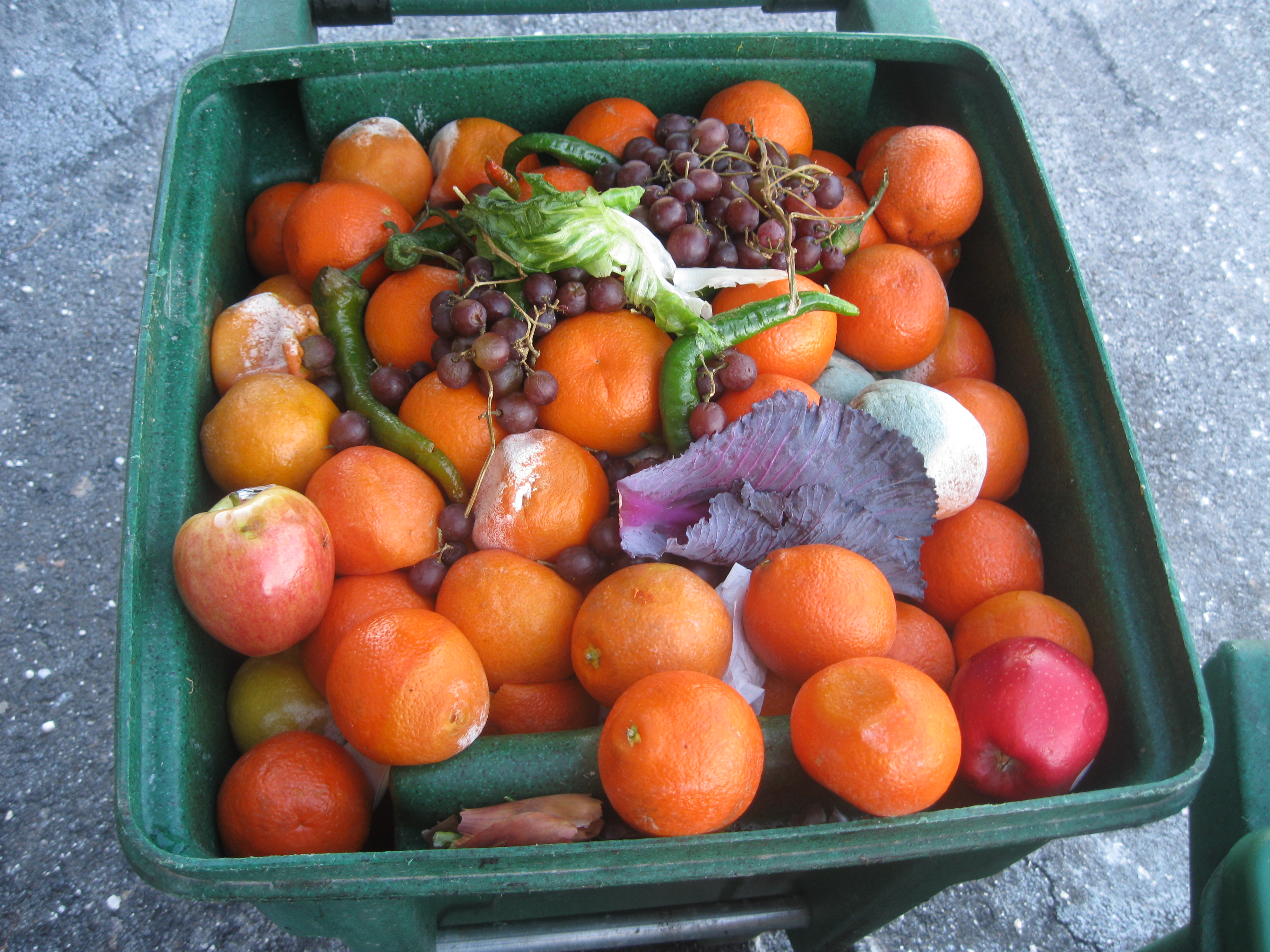
Food waste has been called the world’s dumbest problem, a no-brainer, insidious, and nonsensical. To state the obvious, food waste is particularly bad in that it deprives nutrition from hungry citizens, consumes scarce water supplies and other resources, contributes to land degradation, deforestation, and biodiversity loss, drives plastic pollution, and contributes excessive greenhouse gas emissions that accelerate global warming, and more.
We know all of this.
I would add that there is a callousness to our level of food loss and waste that erodes our sense of humanity and dampens our collective inclination to help those experiencing food insecurity.
So it is easy to feel that food waste is assuredly a bipartisan issue.
In short, how could something that is so nonsensical not be bipartisan?
And yet food loss and waste in the U.S. (and abroad) remains excessive.
ReFED’s recent report (From Surplus to Solutions) noted that in 2023 the U.S. generated 74 million tons of food waste – which represents 31% of our food supply. This level of waste amounts to $382 billion in financial terms and 442 pounds per capita. Further, just 2% of this surplus is donated, while 85% goes to waste destinations.
In its 2023 report (Food Waste Management: Quantifying Methane Emissions from Landfilled Food Waste), the U.S. EPA noted that food waste accounted for roughly 20% of municipal solid waste in U.S. landfills, and that 58% of methane emissions from these landfills are attributed to food waste.
And previously, in its 2021 report (From Farm to Kitchen: The Environmental Impacts of U.S. Food Waste), the EPA provided several powerful equivalencies to convey the environmental and social impact of food loss and waste in the U.S., noting that it embodies 140 million acres of agricultural land (an area the size of California and New York), consumes an amount of water equivalent to the annual consumption of 50 million American homes, and generates the annual emissions equivalent of 42 coal-fired power plants.
The report also indicated that this uneaten food contains enough calories to feed 150 million citizens, roughly four times the then-estimate of 35 million food insecure Americans.
Today, we have 74 million tons of surplus food, while Feeding America reports that 47 million Americans are food insecure, including 14 million children.
Simply put, these are colossal environmental and social disconnects that do not support the idea that food waste is a bipartisan issue.
And while the U.S. now has a national strategy for reducing food loss and waste, unveiled at the ReFED Summit in 2024, the release of that strategy (which I was very glad to see) came 9 years after the announcement of our commitment to reduce food loss and waste by 50% by 2030.
A national commitment without a related national strategy for nearly a decade does not suggest bipartisan support.
Are there some bright spots? Yes, there are. And like many, I am excited by them.
Awareness of the scale and impacts of food loss and waste in the U.S. continues to grow. Scores of dedicated food recovery groups work diligently to recover excess food for those in need, NGO’s continue to do meaningful educational work and policy advocacy, legislative initiatives to curb food waste are being enacted in many states, solution providers continue to innovate with products to help reduce food waste across all sectors of the food system, and many large companies have made commitments to halve food waste in their operations.
But despite these bright spots we are lurching along (domestically and globally) on a challenge that requires us to move at warp speed.
In our passion to bring sense to this nonsensical problem, we are prone to grasp onto each incremental gain – such as the creation of a single federal liaison position for food loss and waste, a sliver of funding, or a federal tri-agency partnership which predominantly extols the benefit of collaboration (versus meaningful action) on food loss and waste reduction – without putting those small gains into proper perspective given the enormity of the challenge.
Last September I attended the Champions 12.3 Summit in New York, where there was a palpable shift in tone regarding the state of progress on global food waste reduction efforts. The mood at the event was one of somber exasperation, emanating from the group’s 2024 Progress Report which noted that the world is at a fork in the road on food loss and waste, and that we must acknowledge the uncomfortable truth that Target 12.3 is fast becoming out of reach.
The report urged everyone to simply “identify at least one thing you can do in a food loss and waste hotspot, and then do it.” It urged each of us to “do something.”
When the leading monitor of global food loss and waste reduction is asking us to choose one thing and just do something, now – it does not instill confidence on the state of progress.
And I believe there is a direct parallel from that global message to the status of our progress in the U.S.
Rethinking the question
So let’s return to the question: Is food waste truly a bipartisan issue?
I don’t believe we have been approaching this question correctly.
I think we need to go up a level, starting with food.
As noted earlier, surplus food accounts for 31% of U.S. food production, with 85% going to waste streams.
That level of waste alone indicates that we do not value food properly.
And if our society doesn’t value food properly in the first place, we are less inclined to focus on reducing food waste with the needed urgency.
Second, let’s consider hunger. Is hunger a bipartisan issue in the U.S.?
If it is, we wouldn’t have nearly 50 million Americans facing food insecurity.
Putting those two themes tougher, if food waste really is a bipartisan issue, it is hard to believe that food would be the largest component of U.S. landfills, and that we would forego the opportunity to utilize the calories embedded in U.S. food loss and waste to eliminate food insecurity here.
Similarly, if food waste truly is a bipartisan issue, U.S. policymakers would easily recognize the nexus aspect of food waste and continually collaborate to unlock the multiplier effect in food waste reduction – if for no other reason than to capture the pure financial gains from greater efficiency.
Changing the narrative
Don’t get me wrong, I want nothing more than to be able to say with confidence that food waste is truly a bipartisan issue.
Because if it truly is, we would be seeing policymakers actively collaborating on food waste reduction initiatives – and we would be showing much greater progression in solving it, and concurrently, achieving greater progress on food security and multiple other SDGs.
But I think our answer to the question of whether food waste is a bipartisan issue must now be guided by results rather than pure emotion.
We need to be clear and honest about where we stand on food loss and waste reduction in the U.S., with the intention that such clarity will help us move forward in bigger and faster ways, raising expectations of food sector organizations for responsible actions and transparent reporting on food waste, accelerating the pace and breadth of food waste reduction legislation, shifting our food-wasting consumer culture to one which properly values food (and wastes less of it), and, ultimately, making clear progress on halving food waste in accordance with our long-ago-stated national goal.
Food waste is a solvable problem, but we’re not solving it with any speed – and in fact, the harsh reality is that the current political dynamic suggests we could be moving in the wrong direction on both food waste reduction and food security.
Our evaluation of the bipartisan question should draw on a concept that many of us heard repeatedly in our youth: Actions speak louder than words.
By quickly affirming that food waste is a bipartisan issue, taking comfort in the idea (and hoping) that something so nonsensical must be bipartisan, I believe we are doing a disservice that inhibits greater speed of action.
Drawing on another phrase from our youth: Hope is not a strategy.
In May of 2021 I wrote a post (Misplaced Optimism, Motivational Pessimism) in which I suggested that we were being too optimistic on the state of progress on food system transformation, and that this level of optimism might be counterproductive, while a more radical candor-like view might help to spur greater action.
In my mind, that same theory applies to how we think about progress on food waste reduction here in the U.S.
We are at a critical juncture. Let’s not be blind in our optimism that food waste is a bipartisan issue, which clouds our judgment and precludes us from pushing more fervently for action. Instead, let’s consider being responsibly pessimistic, harnessing that motivation to raise our expectations of policymakers and drive change at the needed scale.
In sum, it is far too easy to assume that food waste is a bipartisan issue, leading us to grasp onto small victories and therefore hope that the needed action will eventually emerge.
But we don’t have time for just incremental victories.
So when asked If food waste is a bipartisan issue, I suggest that our answer should reflect whether we are satisfied with the state of progress on food loss and waste reduction in the U.S.
Are we?
I think we are in need of a realistic go-forward narrative to guide our response to this question.
I find that an excellent framing comes from Jose Andres of World Central Kitchen, an individual who refuses to accept delay when it comes to feeding people in crises. Andres lives by the mantra: the urgency of now is now.
Why don’t we all apply that same mindset to food waste reduction?
It’s time for radical candor. If we get real with the slow state of action on food loss and waste reduction in the U.S and express our dissatisfaction with delay to policymakers, we just might make food waste the bipartisan issue that it needs to be.
 food for thoughtful action